Red zone aggression training in Leicester
For dogs whose aggression is aimed at other dogs — or even people. Many of Jo’s clients come to her as a last resort, after being told there’s no hope. Most of the dogs she works with have aggression issues.
- Dog-on-dog aggression
- Aggression to people
- Lunging
- Dogs that have bitten

What is the red zone?
Red means danger, and that’s what it stands for here. If you live with a red zone dog, you probably don’t need a definition — you already know.
Dogs, like people, stop listening when they’re in a state of aggression. The key is to stop your dog getting there in the first place — and that’s exactly what Jo teaches.
The four zones, and when to step in
Calm
You’ll see: Soft eyes, loose body, relaxed mouth, tail at its natural height.
What to do: Carry on. This is where learning happens.
Alert
You’ll see: Ears forward, head up, body still, weight shifting onto the front legs.
What to do: Notice it early. Create a little space and keep moving.
Stressed
You’ll see: Lip-licking, yawning, the whites of the eyes, raised hackles, pulling hard.
What to do: Step in now — calmly change direction before it builds.
Red zone
You’ll see: A hard stare, freezing, growling, lunging or snapping.
What to do: Your dog has stopped listening. The goal is never to get here.
Does this sound like your dog?
- Lunges, barks or screams at other dogs on the lead
- Growls, snaps or has bitten — a dog, a visitor or a family member
- Freezes and stares hard before it kicks off
- You walk at odd hours, or cross the road, to avoid other dogs
- Another trainer has said there’s nothing more they can do
- You’re starting to think about rehoming
If you ticked even one, you’re exactly who Jo works with. A free phone call is the first step — no judgement, no pressure.
How Jo helps
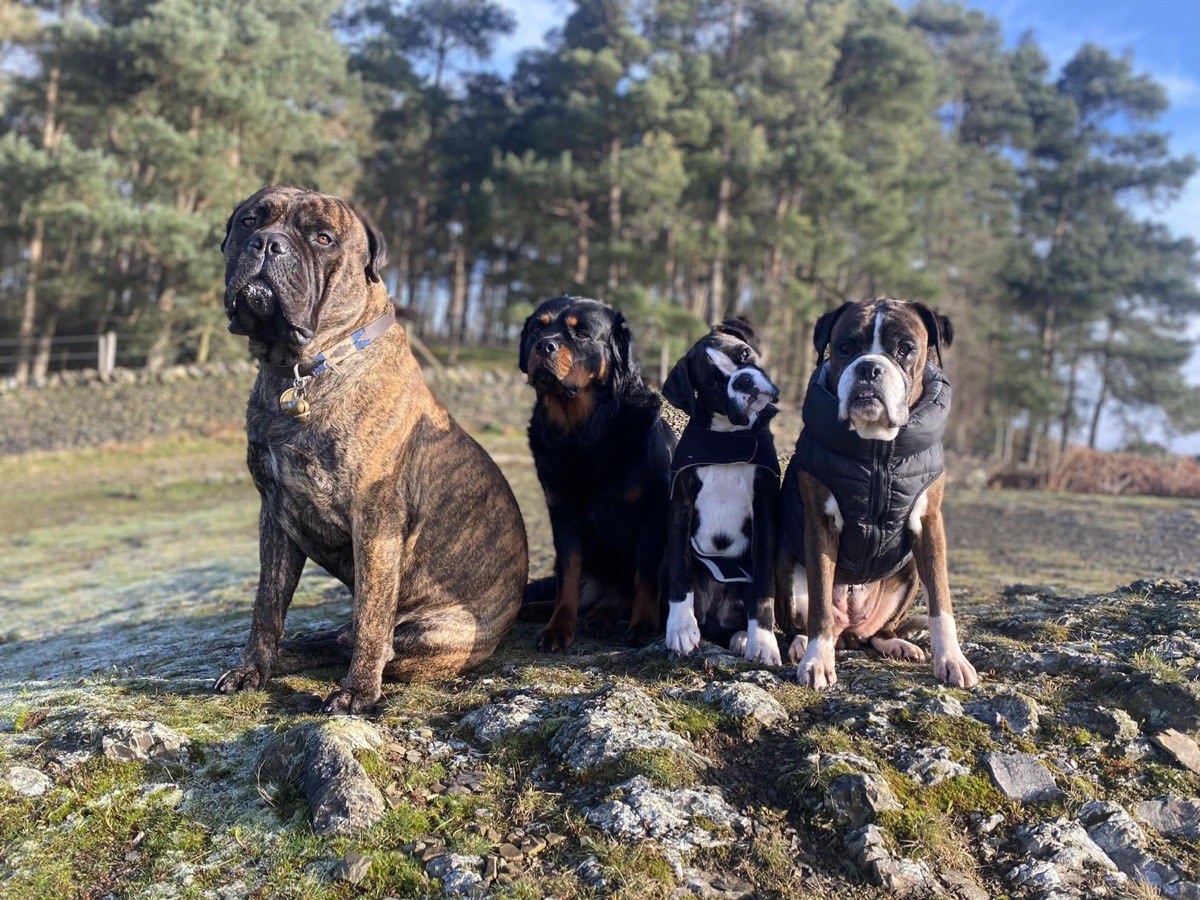
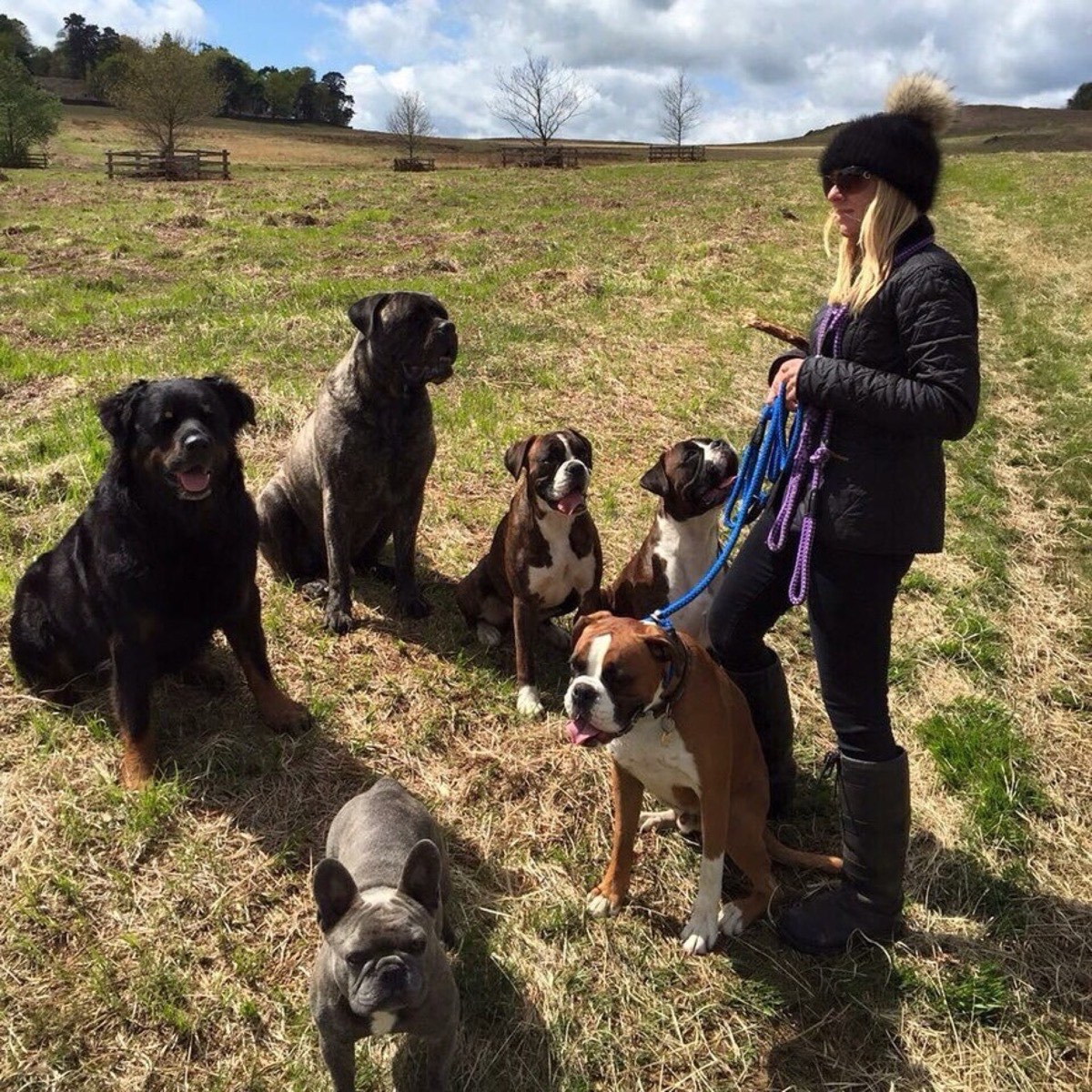
By understanding the psychology of dogs, Jo pinpoints what needs adjusting — then shows you how to time your response so your dog never escalates into the red zone. The work happens in the real world, with Jo’s own well-balanced pack, not in a training hall.
There’s no fear-based and no food-based training: you repeat the good behaviours and discourage the unwanted ones, calmly and consistently. If you’re prepared to put in the time, a dog that has had issues for years can become a reformed character.
- H
Hear the story
A straight-talking first call. No judgement, no pressure.
- E
Explain the why
Root cause and body language, not just symptoms.
- E
Engage in the real world
Streets, doorways, fields — with the pack.
- L
Lead with calm
Time it before the red zone. Progress that lasts.
What owners say
“Jo has been awesome in helping my dog, Lottie! She’s straight to the point and very easy to talk to. I’m mad at myself for not going to her sooner.”
“We had already made the heartbreaking decision to rehome Murphy if this wasn’t a success. A month in, we’ve made more progress with him than in the four years we’ve had him.”
“At the end of our tether and considering rehoming, I contacted Jo as a last resort. In just one session she showed us how to deal with Asher — four weeks on, he’s like a different dog. We now have a calmer life.”
Questions, answered
My dog has bitten before. Will you still take us on?
Yes. Most of the dogs Jo works with have aggression issues. After a telephone assessment, she builds a plan around your dog — whatever the breed, size or temperament.
Can an aggressive dog really change?
In Jo’s experience, most can — often faster than owners expect. Many see a difference in the very first session. Lasting change comes from you practising the new routine every day, so Jo makes sure you leave knowing exactly what to do.
Is my dog safe around Jo’s pack?
Jo’s four dogs are calm and well balanced, and she controls every introduction. Working alongside a steady pack is one of the fastest ways for a reactive dog to learn that other dogs aren’t a threat.
Do you use fear or food-based training?
No. Repeat the good behaviours and discourage the unwanted ones — calmly and consistently.
You don’t have to keep living like this.
One call. No judgement. A clear, calm plan for you and your dog.